Cycle Fit Review
We help facilities describe daily load volume, wrapped versus unwrapped instruments, dry time expectations, and throughput pressure so equipment sizing reflects the work rather than a catalog shortcut.

Sterilization reliability for clinics, dental teams, and care operations audited under ISO 13485 discipline.
Capability
Tuttnauer capability support helps teams move from general product interest to a usable sterilization program. The conversation covers chamber size, cycle type, wrapped instruments, drying expectations, indicator routines, cleaning supplies, service access, and documentation before a purchase request is finalized.
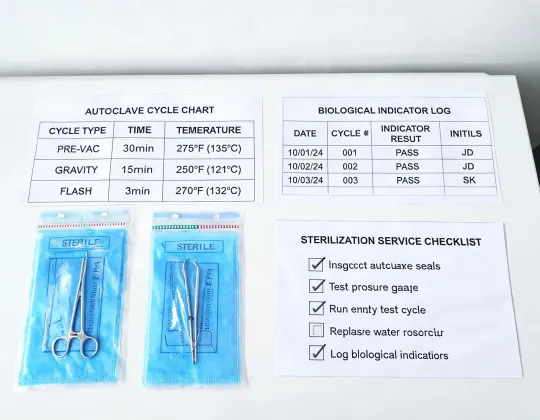
We help facilities describe daily load volume, wrapped versus unwrapped instruments, dry time expectations, and throughput pressure so equipment sizing reflects the work rather than a catalog shortcut.
Procurement can request manuals, IFU references, service notes, accessory lists, and quote context in one place. That reduces repeat emails and gives approvers a clearer file.
Before installation, teams can discuss PM frequency, access around the unit, gasket and filter expectations, chamber cleaning routines, and escalation routing for urgent operator questions.
The review starts with the facility's operating pattern. A single-location dental office may need a compact chamber and excellent staff training, while a growing group practice may need redundancy, consistent consumables, and a service plan that works across sites. A distributor may need enough detail to prevent customers from choosing by price alone. Capability planning turns those differences into a practical request.
We also focus on the sterilization room itself. Bench strength, door swing, access to water handling, separation of clean and contaminated areas, staff movement, printout retention, and indicator storage all influence the user experience. A reliable autoclave program is easier to maintain when the room supports the process.
Finally, the review prepares the after-sale rhythm. Operators should know how to report a failed cycle, when to clean the chamber, what consumables to keep on hand, where records are stored, and who receives service questions. That rhythm is the difference between equipment ownership and operational confidence.